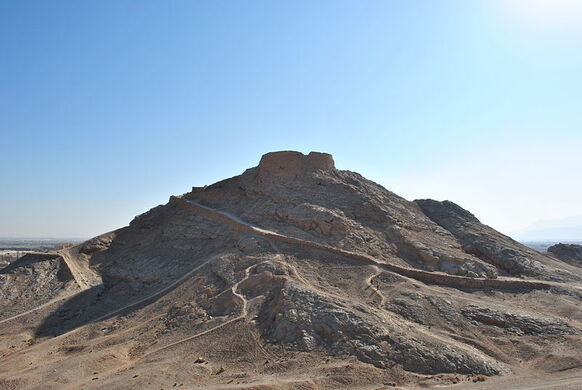
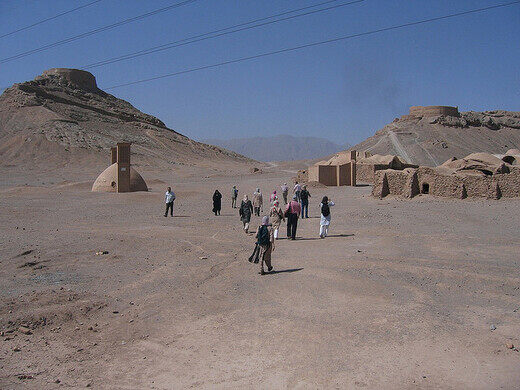
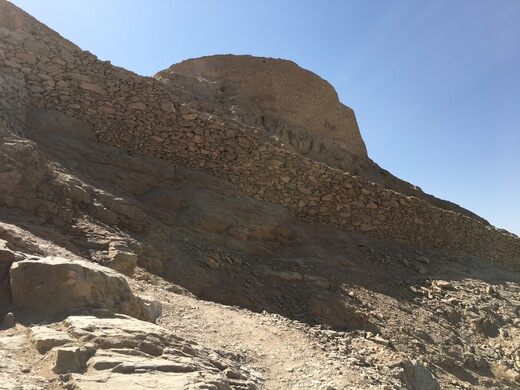
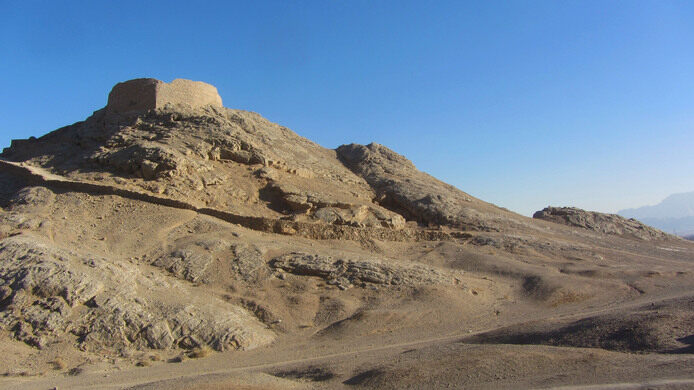
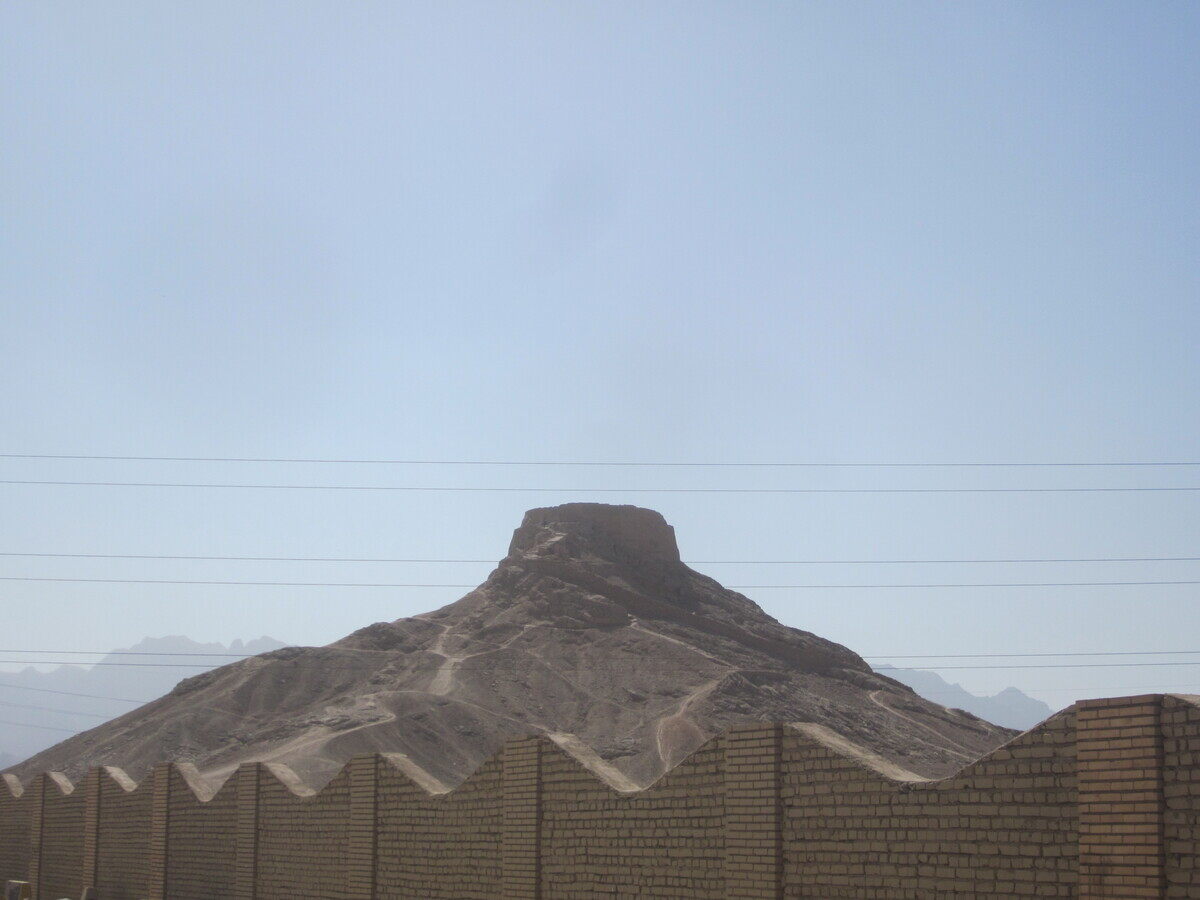
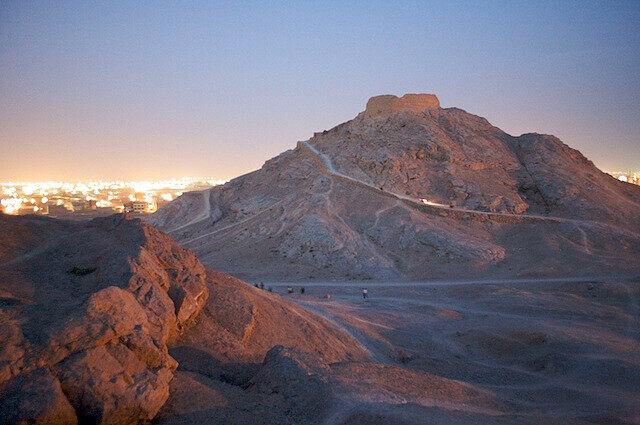
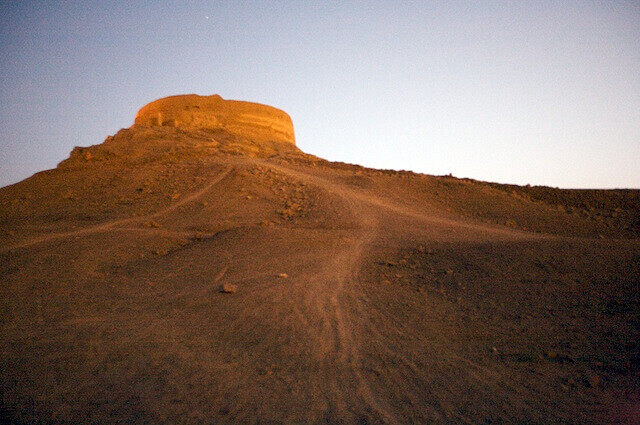
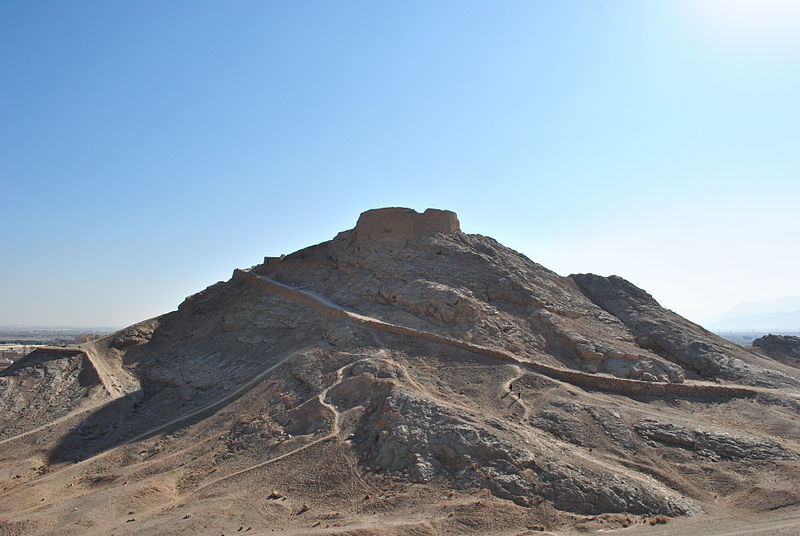
Two hilltop towers overlook the Iranian city of Yazd, their simple cylindrical walls giving no indication of the gruesome scenes that once took place within them. The structures are known as dakhma, or towers of silence. The Zoroastrians of Yazd used these places as open burial pits, placing their deceased relatives in rows so their bodies would be feasted upon by birds of prey.
At Yazd, bodies were hauled up to the towers and arranged in concentric circles with their feet pointing toward the center. Children were placed in the innermost ring, women in the next, and men in the outside ring. Once bodies had been stripped of flesh, muscle, and organs, and the skeletons bleached and weakened in the sun, the bones were placed in a central pit to break down.
Sky burial—placing a deceased human body in an exposed location so that animals and the elements will hasten its decomposition—has long been a part of Zoroastrian tradition. According to the religion’s beliefs, a body becomes impure at death, when evil spirits, or nasu, arrive to attack the flesh and soul of the deceased. By contaminating the corpse, nasu also threaten the living. Sky burial is considered a clean death because it prevents putrefaction—birds of prey such as vultures can eat a body down to the bones in just a few hours.
In the Iranian Zoroastrian tradition, the towers were built atop hills or low mountains in desert locations distant from population centers. In the early twentieth century, the Iranian Zoroastrians gradually discontinued their use and began to favour burial or cremation.
Zoroastrians believed that the dead body would "pollute" the earth if buried in it; in order to combat this problem, they built the Towers of Silence close to the sky, where special caretakers would carry up the dead. In these large and exposed circular spaces, the sun and birds left behind nothing but bones, that were later collected and finally disintegrated by lime and water. The Towers haven’t been used since the 1960s, as the Iranian government has banned this practice. At the bottom of the Towers lie the ruins of a small village, almost entirely camouflaged by the desert.
The decision to change the system was accelerated by three considerations: the first problem arose with the establishment of the Dar ul-Funun medical school. Since Islam considers unnecessary dissection of corpses as a form of mutilation, thus forbidding it, there were no corpses for study available through official channels. The towers were repeatedly broken into, much to the dismay of the Zoroastrian community. Secondly, while the towers had been built away from population centers, the growth of the towns led to the towers now being within city limits. Finally, many of the Zoroastrians found the system outdated. Following long negotiations between the anjuman societies of Yazd, Kerman, and Tehran, the latter gained a majority and established a cemetery some 10 km from Tehran at Ghassr-e Firouzeh (Firouzeh's Palace). The graves were lined with rocks and plastered with cement to prevent direct contact with the earth. In Yazd and Kerman, in addition to cemeteries, orthodox Zoroastrians continued to maintain a tower until the 1970s when ritual exposure was prohibited by law.
A Dakhma also called a Tower of Silence, is a circular, raised structure built by Zoroastrians for excarnation – that is, for dead bodies to be exposed to carrion birds, usually vultures.
Zoroastrian exposure of the dead is first attested in the mid-5th century BC Histories of Herodotus, but the use of towers is first documented in the early 9th century CE. The doctrinal rationale for exposure is to avoid contact with Earth or Fire, both of which are considered sacred in the Zoroastrian religion.
One of the earliest literary descriptions of such a building appears in the late 9th-century Epistles of Manushchihr, where the technical term is astodan, "ossuary" Another technical term that appears in the 9th/10th-century texts of Zoroastrian tradition (the so-called Pahlavi books) is dakhmag, for any place for the dead. This Zoroastrian Middle Persian term is a borrowing from Avestan dakhma, of uncertain meaning but related to interment and commonly translated as "grave". In the Avesta, the term is pejorative and does not signify a construction of any kind. In the Iranian provinces of Yazd and Kerman, dakhma continues as deme or dema. Yet another term that appears in the 9th/10th-century texts is dagdah, "prescribed place". The word also appears in later Zoroastrian texts of both India and Iran, but in 20th-century India came to signify the lowest grade of temple fire.
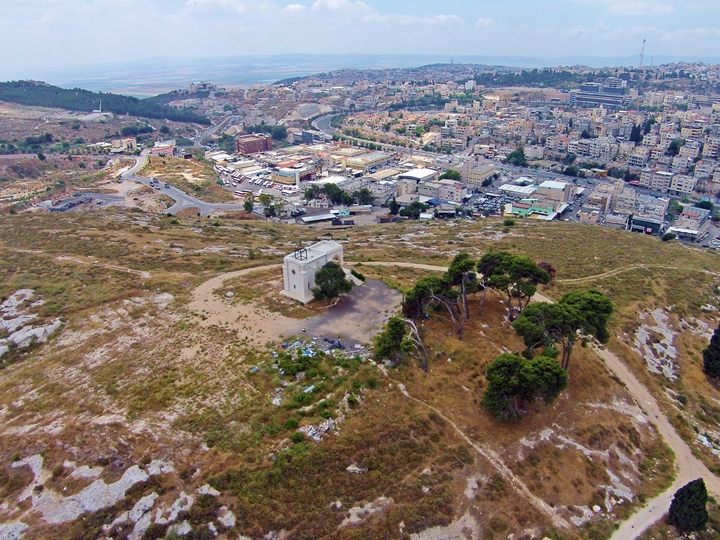
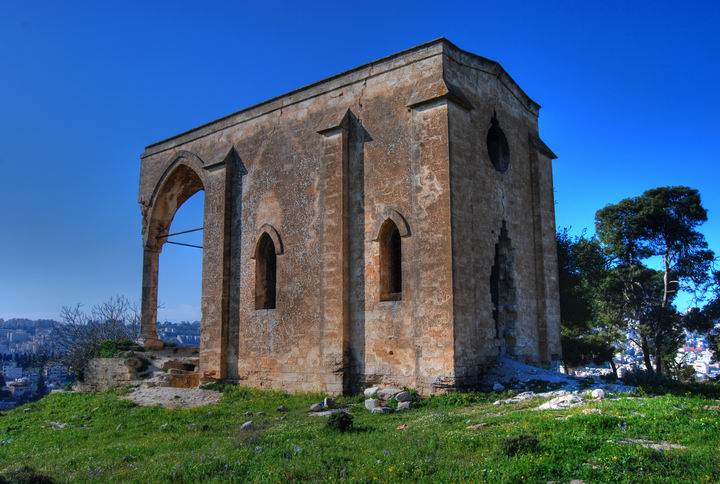
In India the term doongerwadi came into use after a Dakhma was constructed on a hill of that name.
The English language term "Tower of Silence" is a neologism attributed to Robert Murphy, a translator for the British colonial government of India in the early 19th century.
برج خاموشان در نزدیکی یزد یکی از بزرگترین و مهمترین دخمههای زردشتیان جهان است که امروزه برای بازدید گردشگران پذیرای عموم است.
در ۱۵ کیلومتری جنوب شرقی یزد و در حوالی منطقه صفائیه، بر بلندای کوهی رسوبی و کم ارتفاع به نام کوه دخمه، دو عمارت سنگی مدور برج مانند با فضای میانتهی قرار دارد که به دخمه یا دادگاه زرتشتیان مشهور است. یکی قدیمیتر به نام مانکجی هاتریا (زرتشتی هندیالاصل) و دیگری که جدیدتر است به نام گلستان معروف است که مربوط به دوره قاجاریه است. دخمه گلستان ۲۵ متر قطر دارد و ارتفاع دیوار آن از سطح تپه ۶ متر است. دخمه مانکجی نیز ۱۵متر قطر دارد.
در دامنه ضلع شمالی این کوه نیز تعدادی عمارت خشت و گلی، آجری، سنگی و یا ترکیبی از هر سه، مجهز به امکانات رفاهی زمان خود "معروف به خیله" دیده میشود. قدیمیترین آثار این محوطه، خیلهها و دخمههای ضلع غربی است که به دوران صفویه تعلق دارند.
دخمه محلی است که زرتشتیان از دیر باز تا حدود چهل سال پیش، اموات خود را طبق اصول، فرهنگ و آداب و سنن مذهبی خود و طی انجام مراسم ویژه در آن مینهادند تا طعمه کرکسهای کوههای اطراف شوند. وسط فضای میانتهی دخمه چاهی وجود دارد که به "استودان" معروف است و استخوانهای به جای مانده از اجساد را داخل آن میریختند.
پس از مدتی و طی مراسمی خاص، محوطه داخل دخمه جارو و ضد عفونی میشد و بار دیگر دخمه مذکور مورد استفاده قرار میگرفت. در حقیقت محوطه داخلی دخمهها مانند گورستانی بود که چندین بار از آن استفاده میشد.
بعد از این که "مانکجی لیمجی هاتریا" معروف به "مانکجی صاحب" به عنوان نماینده «انجمن بهبودسازی وضعیت زرتشتیان در ایران» در حدود ۱۴۰ سال قبل و از طرف پارسیان بمبئی برای بهبود وضع اجتماعی و دینی زرتشتیان به ایران آمد، بعضی از دخمهها تعمیر و نوسازی و دخمههای جدیدتری هم ساخته شدند که مدتی مورد استفاده قرار داشتند. بعدها در تهران از اواسط دهه ۱۳۱۰، در کرمان از دهه ۱۳۲۰ و در یزد از دهه ۱۳۴۰ به بعد دخمه تبدیل به آرامگاه گردید و به کلی فراموش شد.